
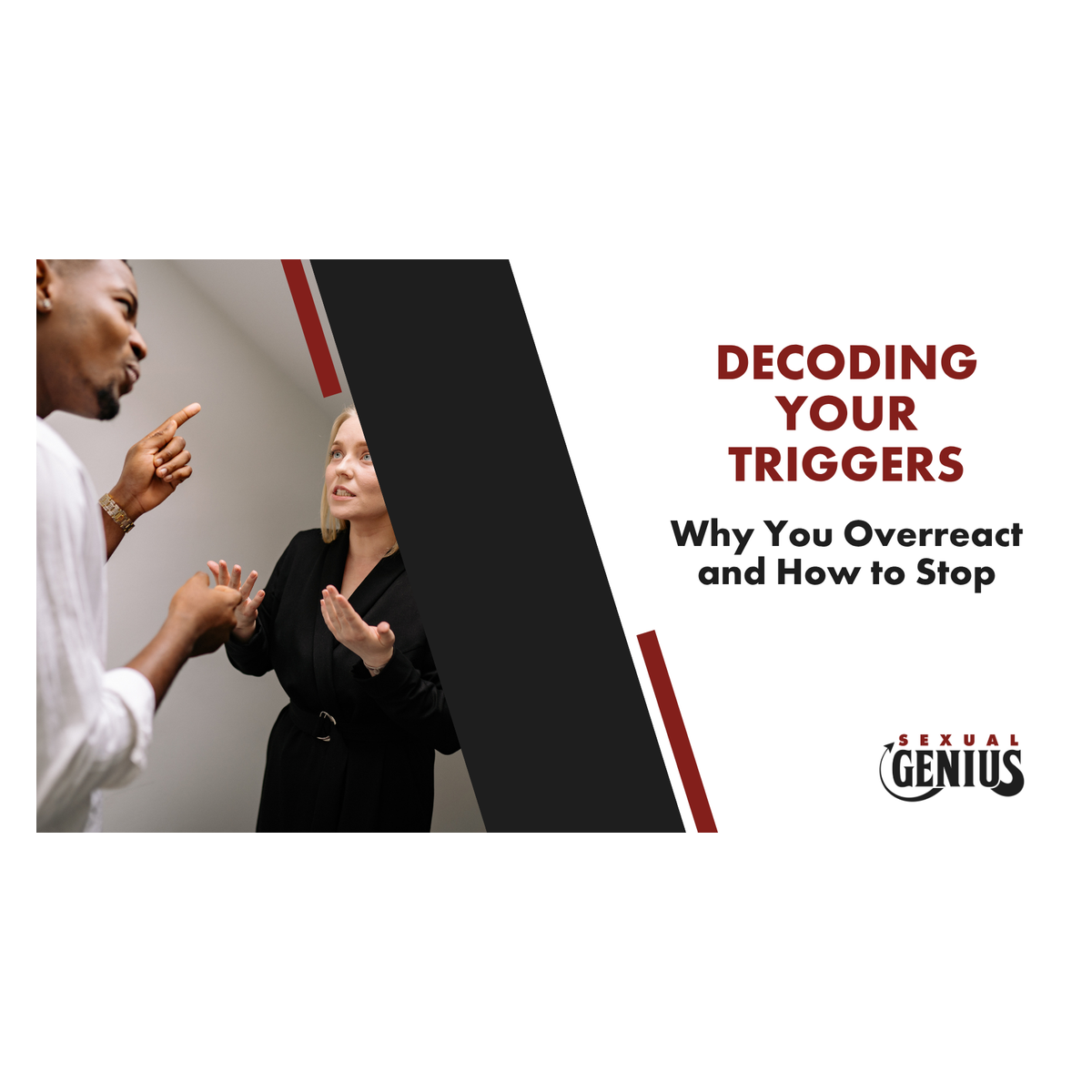
We all have them. Those specific situations, words, or tones of voice that instantly send us from calm to furious in a matter of seconds. One minute you are having a normal conversation with your partner, and the next minute you are defensive, agitated, and ready for an argument. You know you are overreacting, but in that moment, it feels completely justified. These sudden, intense emotional spikes are called triggers, and understanding them is the first step toward true emotional mastery. A conscious man knows that his triggers are not caused by the external world; they are alarms sounding from unresolved issues within himself.
When you are triggered, your reaction is rarely about the present moment. It is almost always an echo from the past. A trigger is a psychological tripwire connected to an old wound, a past rejection, or a deeply held insecurity. For example, if your partner asks you a simple question about your schedule, and you instantly feel criticized and controlled, the question itself is not the problem. The question has triggered an old, unresolved feeling of being micromanaged or not being trusted. Your brain is reacting to the past threat, not the present reality.
The problem with living at the mercy of your triggers is that it makes you incredibly easy to manipulate. If anyone can make you angry just by pressing the right button, you are not in control of your own life. You are a puppet, and your unresolved wounds are pulling the strings. This reactivity destroys trust in relationships, damages professional reputations, and leaves you feeling constantly exhausted. You cannot lead effectively or love deeply if you are constantly defending yourself against invisible threats.
The path to dismantling your triggers begins with radical self honesty. You have to stop blaming other people for making you feel a certain way. No one can make you feel anything without your subconscious permission. The next time you experience a sudden, disproportionate emotional reaction, you must immediately investigate it. Instead of lashing out at the person who triggered you, turn your attention inward. Ask yourself what you are actually feeling beneath the anger. Is it fear? Is it shame? Is it a feeling of inadequacy?
Once you identify the underlying emotion, you can begin to trace it back to its source. When was the first time you felt this way? Who originally made you feel like you were not enough, or that you had to constantly defend yourself? This process of emotional archaeology is uncomfortable, but it is necessary. By bringing the origin of the trigger into your conscious awareness, you strip it of its power. You realize that the current situation is just an echo, and you do not have to react to an echo.
This work requires a commitment to the pause. When you feel the familiar surge of a trigger, your immediate instinct will be to attack or retreat. You must train yourself to do neither. You must create a space between the trigger and your response. In that space, you have the power to choose. You can choose to take a breath, acknowledge the old wound, and respond to the present situation with clarity and maturity.
Mastering your triggers is not about becoming an emotionless robot. It is about becoming a man who is deeply aware of his own internal landscape. It is about taking responsibility for your own healing so that you do not bleed on the people who did not cut you. This is the foundation of emotional intelligence. It is the standard of the Sexual Genius.
If you’re ready to stop settling and start building the confidence, control, and sexual presence that unlock your full potential, begin with the Foreplay Course. It gives you the framework to sharpen your skills, deepen attraction, and create a more powerful intimate life from the ground up.
If people can trigger you on command, they control you. Face the wound, master the pause, and stop bleeding on people who did not cut you.


