
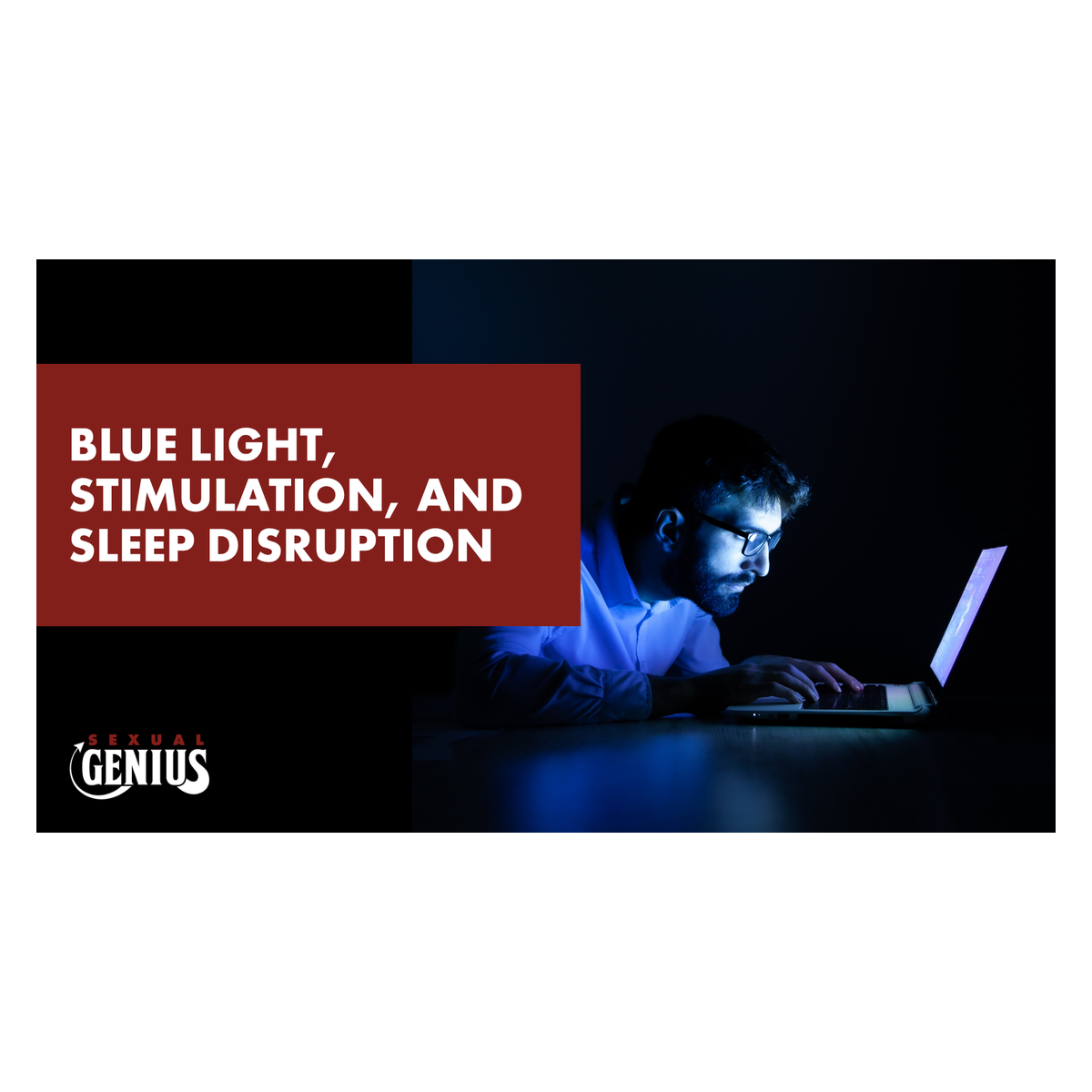
Your body has an ancient, internal clock. For hundreds of thousands of years, this clock has been synchronized to the rising and setting of the sun. The bright, blue-tinged light of morning signals to your brain that it is time to be alert, focused, and productive. The warm, dim, red-hued light of evening signals that it is time to wind down, relax, and prepare for sleep. This is your circadian rhythm, and it is the master regulator of your hormonal health.
Then, we invented the lightbulb. And the television. And the smartphone. And in the span of a few short decades, we have waged a full scale assault on this ancient biological programming. We are a society of people who stare into artificial suns long after the real one has set, and we are paying a steep price in the currency of our sleep, our hormones, and our sexual vitality.
Blue Light: The Anti-Sleep Signal
Blue light is not inherently bad. In fact, it is essential for regulating your circadian rhythm. The problem is not the light itself, but the timing and the dose. The screens we stare at all day and all night,such as our phones, our laptops, our televisions—are potent sources of blue light.
When your eyes are exposed to blue light in the evening, it sends a powerful signal to your brain that it is still daytime. This directly suppresses the production of melatonin, the hormone that tells your body it is time to sleep. Without adequate melatonin, you may find it difficult to fall asleep, or you may experience a shallow, fragmented sleep that leaves you feeling unrefreshed.
Stimulation: The Enemy of Calm
But blue light is only half of the story. The content we consume on our screens is often just as disruptive. The endless scroll of social media, the anxiety-inducing news cycle, the emotionally charged dramas, these are all forms of mental and emotional stimulation. They keep your nervous system in a state of high alert, flooding your body with the stress hormones cortisol and adrenaline.
This creates a perfect storm of sleep disruption. The blue light is telling your brain it is daytime, and the stimulating content is telling your nervous system that you are in a state of emergency. This is the polar opposite of the calm, relaxed, parasympathetic state required for deep, restorative sleep. You are flooring the gas pedal while desperately hoping to fall asleep.
The Path to Recovery
This is not about fear. This is about empowerment. Understanding these mechanisms gives you the power to make different choices. The solution is not to throw away your phone and live in a cave. It is to create intelligent and disciplined boundaries around your technology use.
This means implementing a “digital sunset” at least 60 to 90 minutes before you intend to sleep. All screens go off. No exceptions. This gives your brain the time it needs to begin producing melatonin and to downshift your nervous system.
It means replacing evening screen time with low stimulation activities like reading a physical book, listening to calming music, stretching, or talking with your partner. It means transforming your bedroom into a sleep sanctuary, free from the intrusion of the digital world.
Your sleep is the foundation of your health. And in the modern world, you must fight to protect it. The good news is that this is a fight you can win. It begins tonight, with the simple, powerful act of turning off your screen.
Better sleep is only part of the equation. The Foreplay Course shows you how to turn restored energy into stronger presence, deeper confidence, and the kind of sexual skill that brings your vitality back where it belongs.
Your screen can sabotage sleep long before your head hits the pillow.


